
Greek Salad
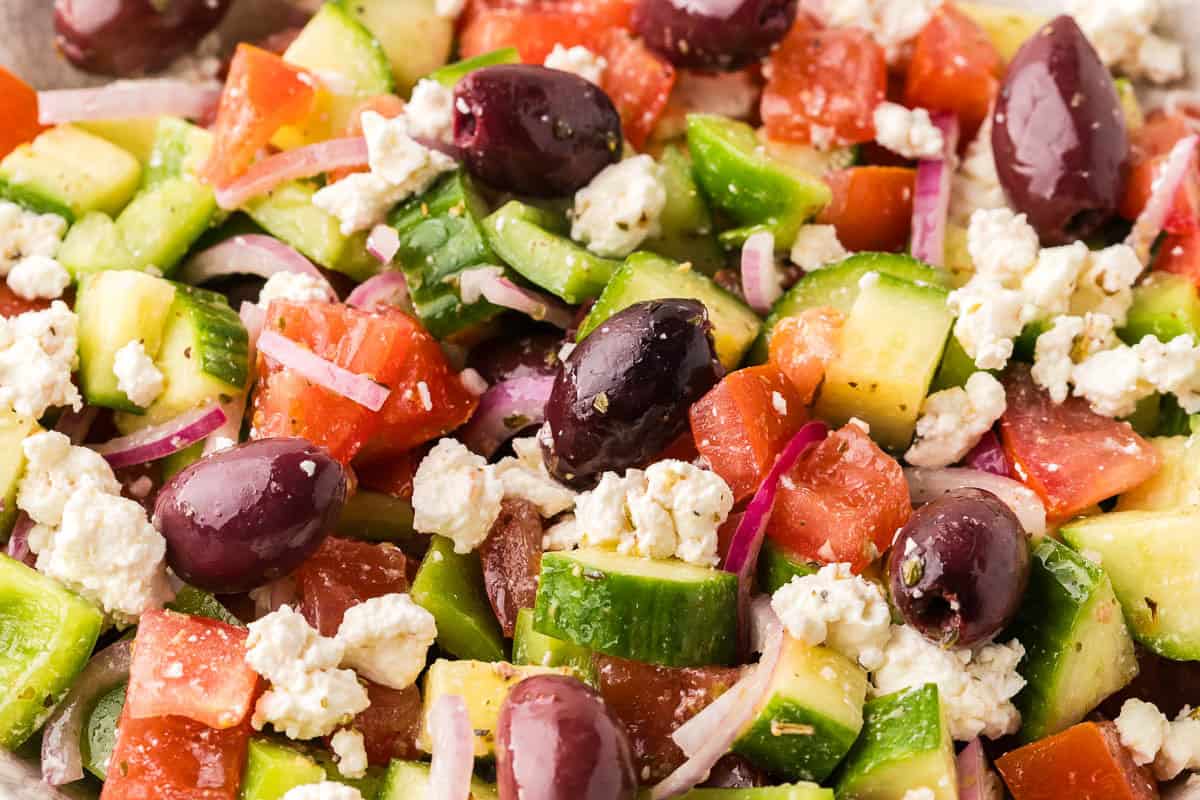
Fresh, colorful, and packed with classic Mediterranean flavors, this Greek Salad is one of those recipes that never goes out of style. Crisp cucumbers, juicy tomatoes, crunchy bell peppers, salty Kalamata olives, and creamy feta cheese come together in a simple homemade dressing that tastes fresh and vibrant in every bite.
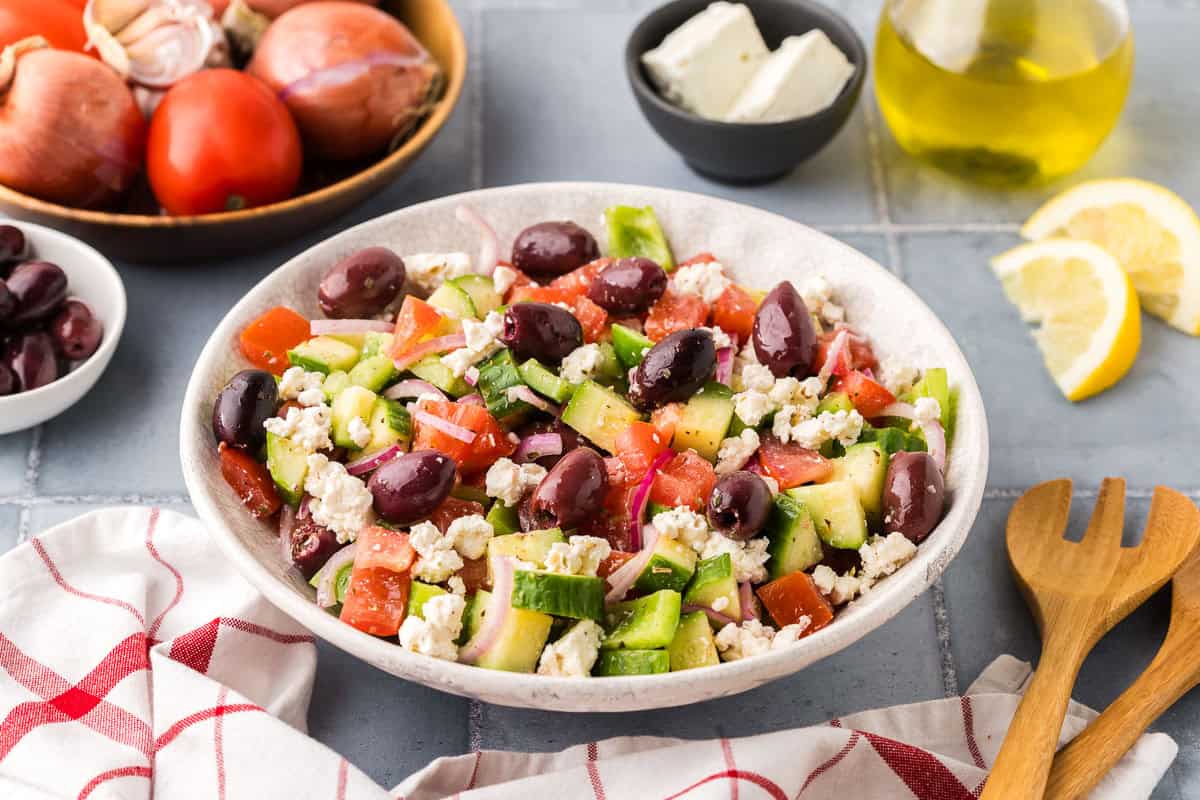
This Greek salad is a workhorse in my house. I serve it alongside a lot of dishes because it pairs perfectly with grilled meats like my chicken souvlaki, garlic parmesan chicken skewers, and even Portuguese Chicken. But it can be more than a side dish, I often eat it as a light lunch with a little canned tuna. It's a quick way to bring bright, fresh flavors to the table.
Jump to:
Ingredients
Exact quantities can be found in the recipe card at the bottom.
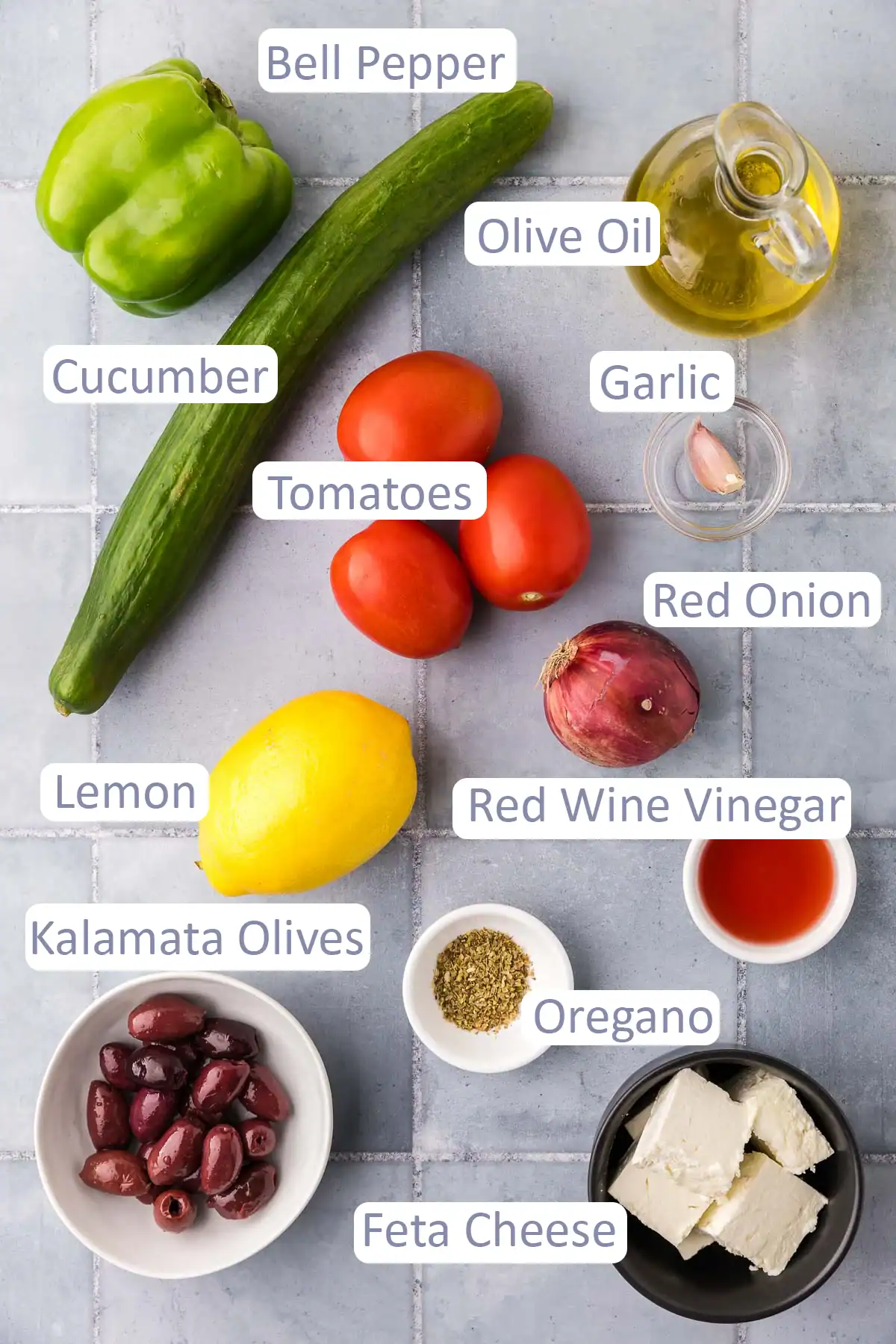
- Roma tomatoes (deseeded) - Add fresh, juicy flavor and a slight sweetness. Additionally, removing the seeds helps prevent excess liquid from watering down the salad.
- English cucumber - Provides a crisp, refreshing crunch and mild flavor. At the same time, it helps balance the saltier ingredients in the salad.
- Bell pepper - Adds crunch, natural sweetness, and a pop of color. As a result, the salad becomes even more vibrant and visually appealing.
- Red onion - Brings a sharp, slightly sweet bite. In addition, it adds depth and creates a flavorful contrast with the fresh vegetables.
- Feta Cheese - Adds a creamy texture and salty, tangy flavor that is a signature element of Greek salad.
- Kalamata Olives, pitted - Give the salad a rich, briny flavor that adds classic Mediterranean taste. You can use olives with pits too, just be careful and warn your guests.
Dressing
- Extra virgin olive oil - Forms the base of the dressing and adds richness while helping coat all of the ingredients.
- Red wine vinegar - Adds acidity and brightness that balances the oil and salty ingredients.
- Fresh lemon juice - Brings fresh citrus flavor and an extra layer of brightness to the dressing.
- Garlic clove - Adds bold savory flavor and gives the dressing more depth.
- Dried oregano - Provides an earthy herb flavor that is traditional in Greek recipes.
- Salt and Pepper - Enhance and balance all of the flavors in the salad.
Instructions
Exact quantities can be found in the recipe card at the bottom of the post.
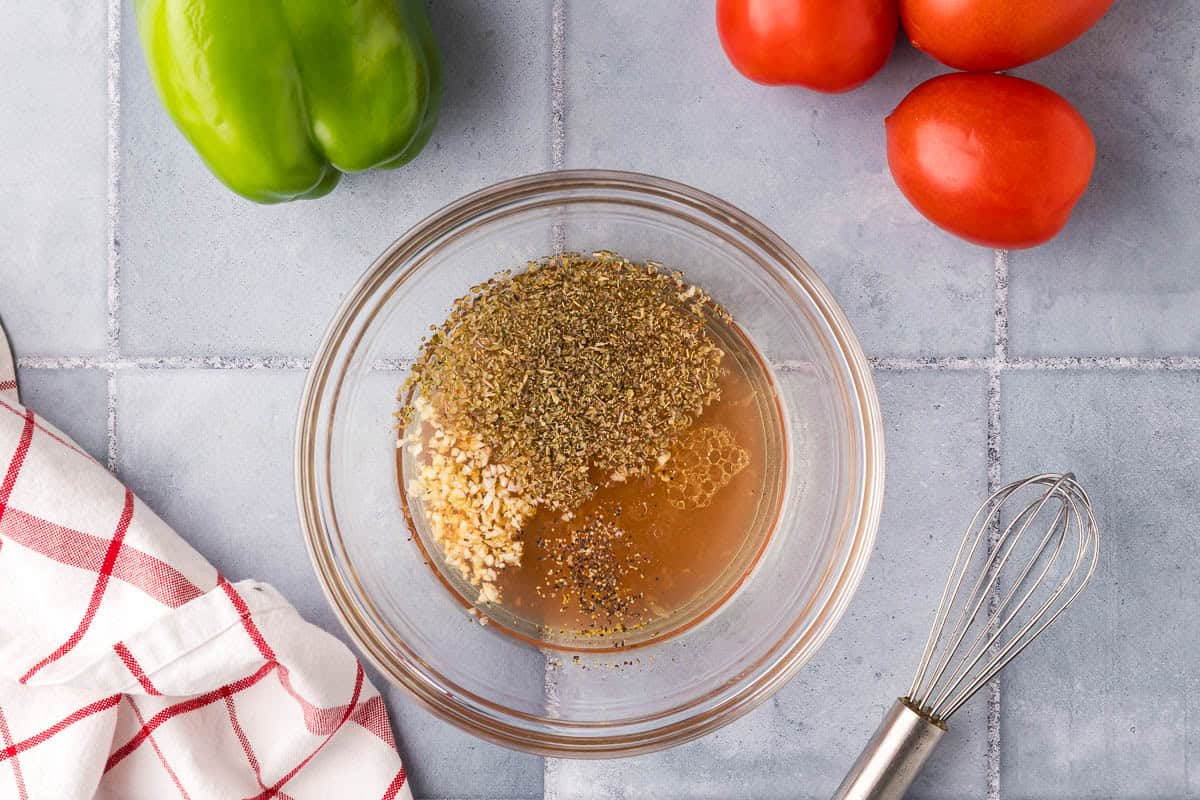
- Into a small bowl add all the dressing ingredients: extra virgin olive oil, red wine vinegar, fresh lemon juice, minced garlic, and dried oregano.
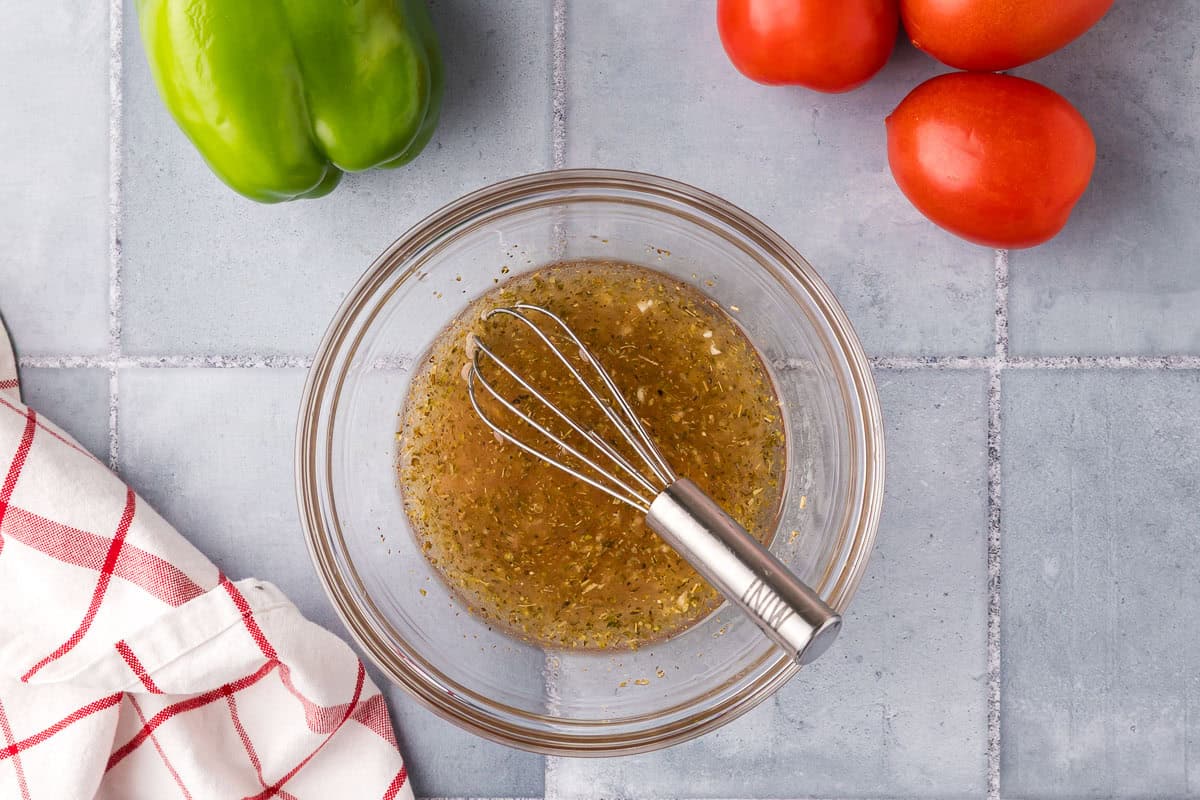
- Whisk together to fully combine. Taste and season with salt and pepper to your liking. Set the bowl aside.
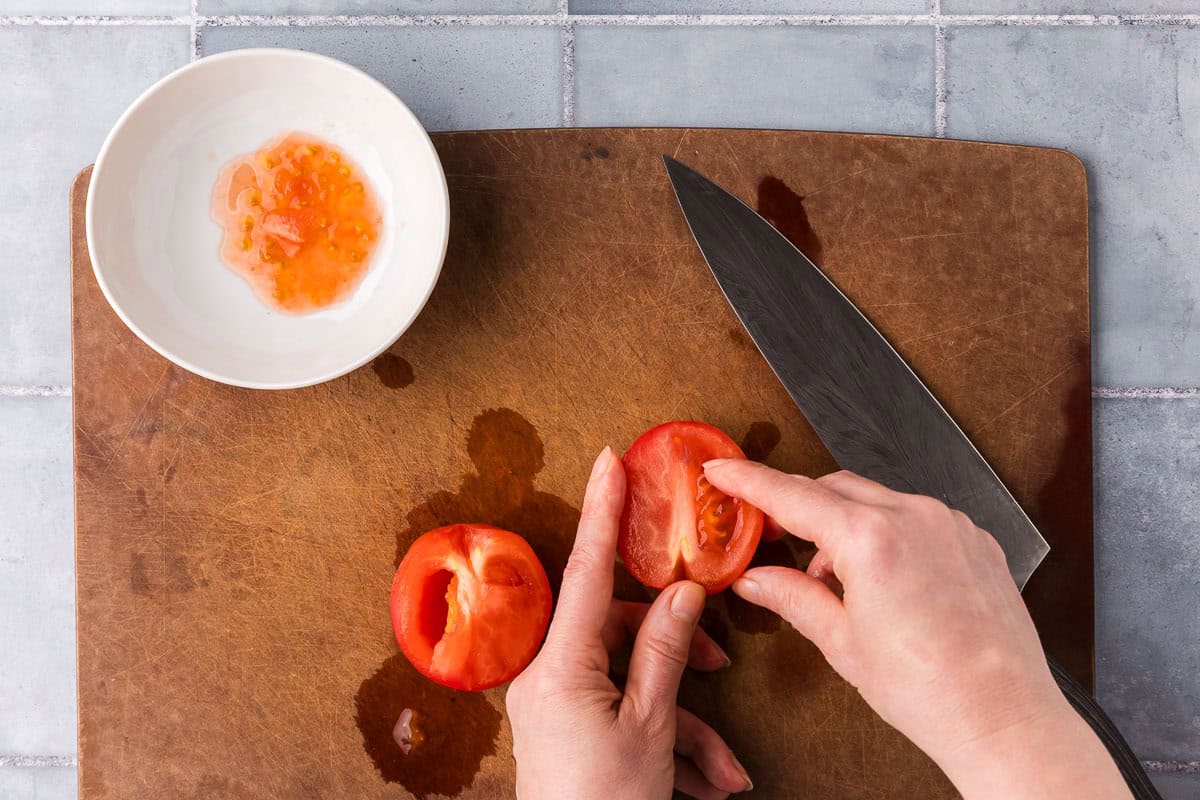
- Slice the tomatoes in half lengthwise and run your finger in behind the membrane to pull out all the seeds and excess liquid.
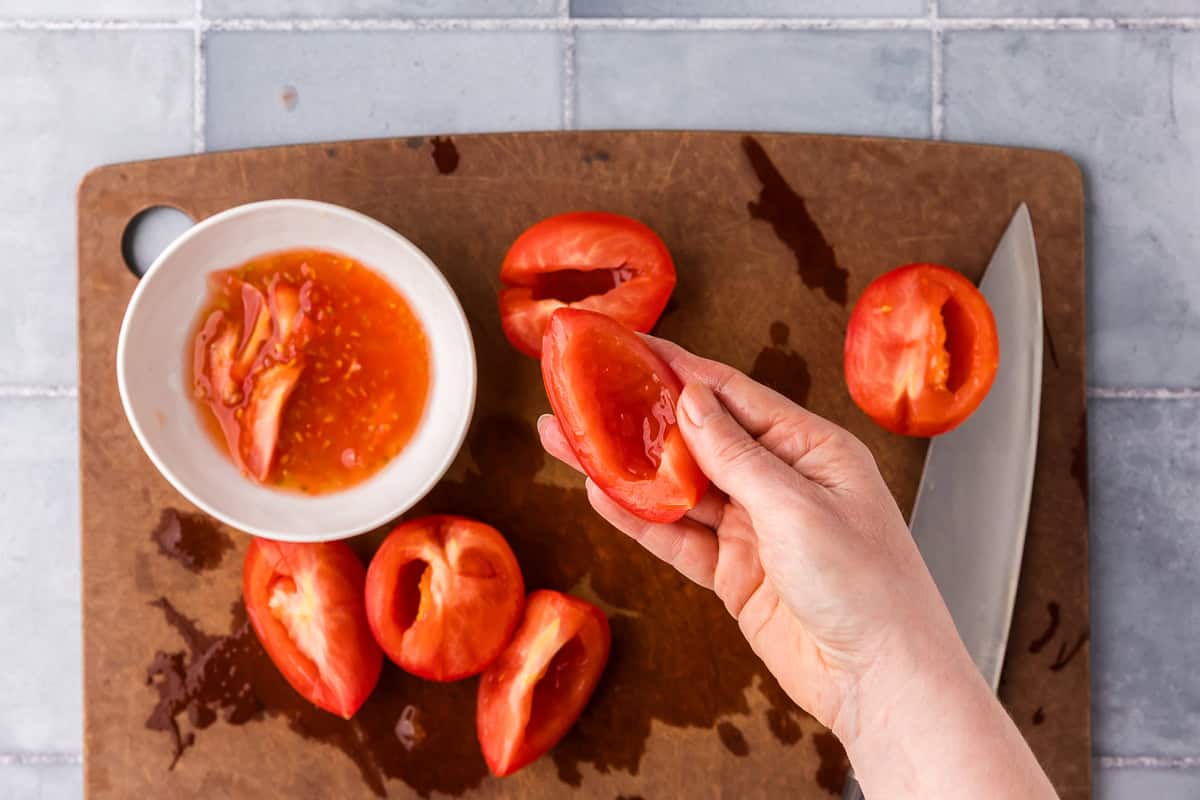
- After deseeding all the tomatoes they are ready to be chopped up into bite sized pieces.
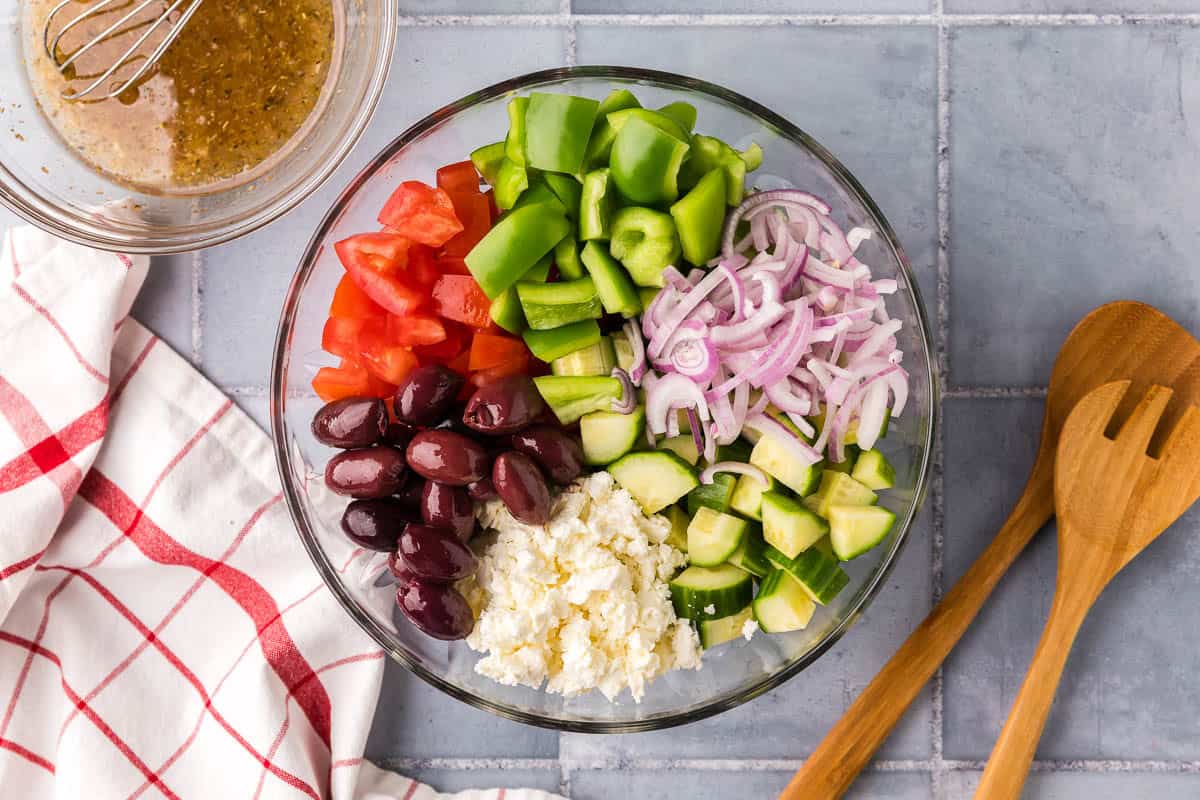
- Chop up the tomatoes, cucumbers, and bell peppers into bite sized chunks. Slice the red onions into thin slivers about 1-2" long. Add in the kalamata olives and feta cheese.
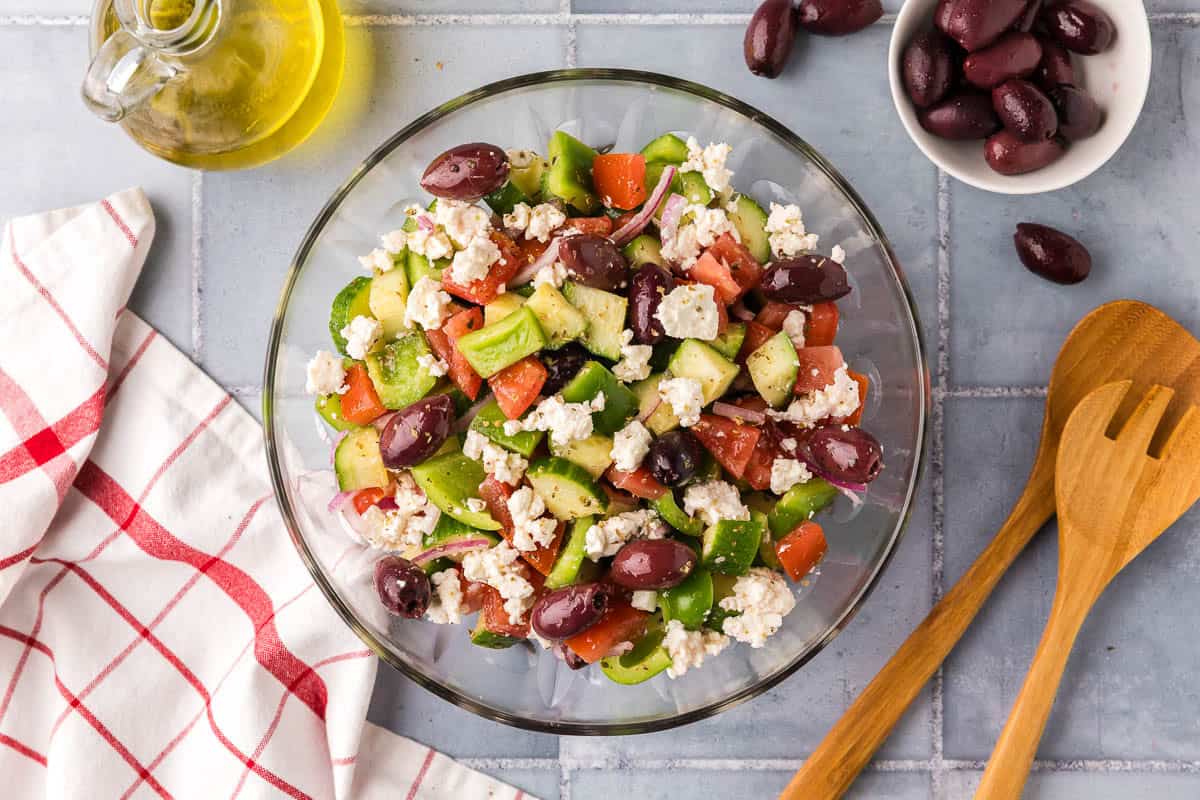
- Pour in the dressing and use a large spoon to combine all the ingredients with the dressing. Serve and enjoy.
Hint: Deseeding the tomatoes helps to keep the salad from getting soggy. If you are eating it all right away, you don't need to deseed, but if it will sit in the fridge for a bit, I recommend it.
Substitutions
If you know how to make the recipe fit a certain diet, let the reader know here. Don't fake it - only provide guidance on topics you have actual experience with.
- Roma Tomatoes - I often use Roma tomatoes because they are available year round and have a meaty texture. But the best tomatoes are the ones that are fresh and in season. I love making this salad with cherry tomatoes too with their sweet burst of flavor. When using cherry tomatoes I don't deseed them.
- Green Bell Pepper- Green bell peppers are the traditional pepper to use in a Greek salad, but feel free to use any color. The red, yellow and orange peppers are all a little sweeter than the green ones.
- Red Onion- You could replace with any onion you have on hand. The red ones are not always milder, but they look nice. You could use a sweet onion too.
- Extra Virgin Olive Oil - feel free to use regular olive oil, or a neutral oil in a pinch if you don't have olive.
- I never recommend replacing fresh lemon juice with store bought lemon juice. It just isn't nearly as good.
- Red Wine Vinegar - you could use apple cider vinegar, white wine vinegar, or champagne vinegar.
This Greek salad is naturally gluten free. You can make it also dairy free by removing the feta cheese, or making it lactose free by finding a lactose free feta.
Equipment
Disclosure: As an Amazon Affiliate, I receive a small amount of compensation from qualifying purchases at no extra cost to you. In turn, this helps support my work and allows me to continue bringing more yummy recipes your way.
Storage
Leftover salad can be stored in an airtight container for about 3 days in the fridge. The vegetables start to release moisture as it sits, but if you deseeded the tomatoes that will really help.
Top Tip
For presentation purposes, sometimes I add the feta cheese and Kalamata olives after the dressing has been mixed with the rest of the ingredients. Then, gently stir them in just before serving. This not only helps prevent them from breaking apart too much, but it also creates a cleaner and more polished presentation.
FAQ
Yes. You can chop the vegetables and prepare the dressing up to a day in advance. For the freshest texture, store everything separately and add the feta cheese and dressing just before serving.
Absolutely. Cherry tomatoes are a great substitute and add a slightly sweeter flavor. You can simply halve or quarter them depending on their size.
Yes, but homemade dressing gives the salad a fresher and more authentic flavor. It also allows you to adjust the seasonings to your preference.
Greek salad is naturally lower in carbohydrates because it focuses on fresh vegetables, healthy fats, and cheese rather than grains or pasta.
Related
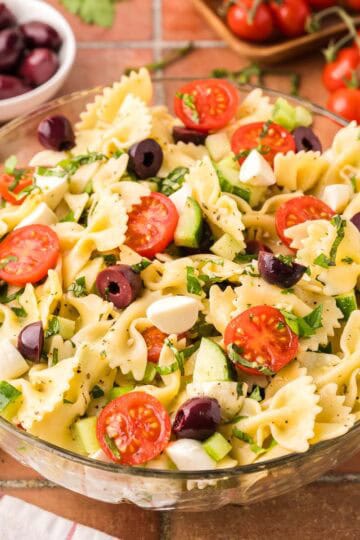
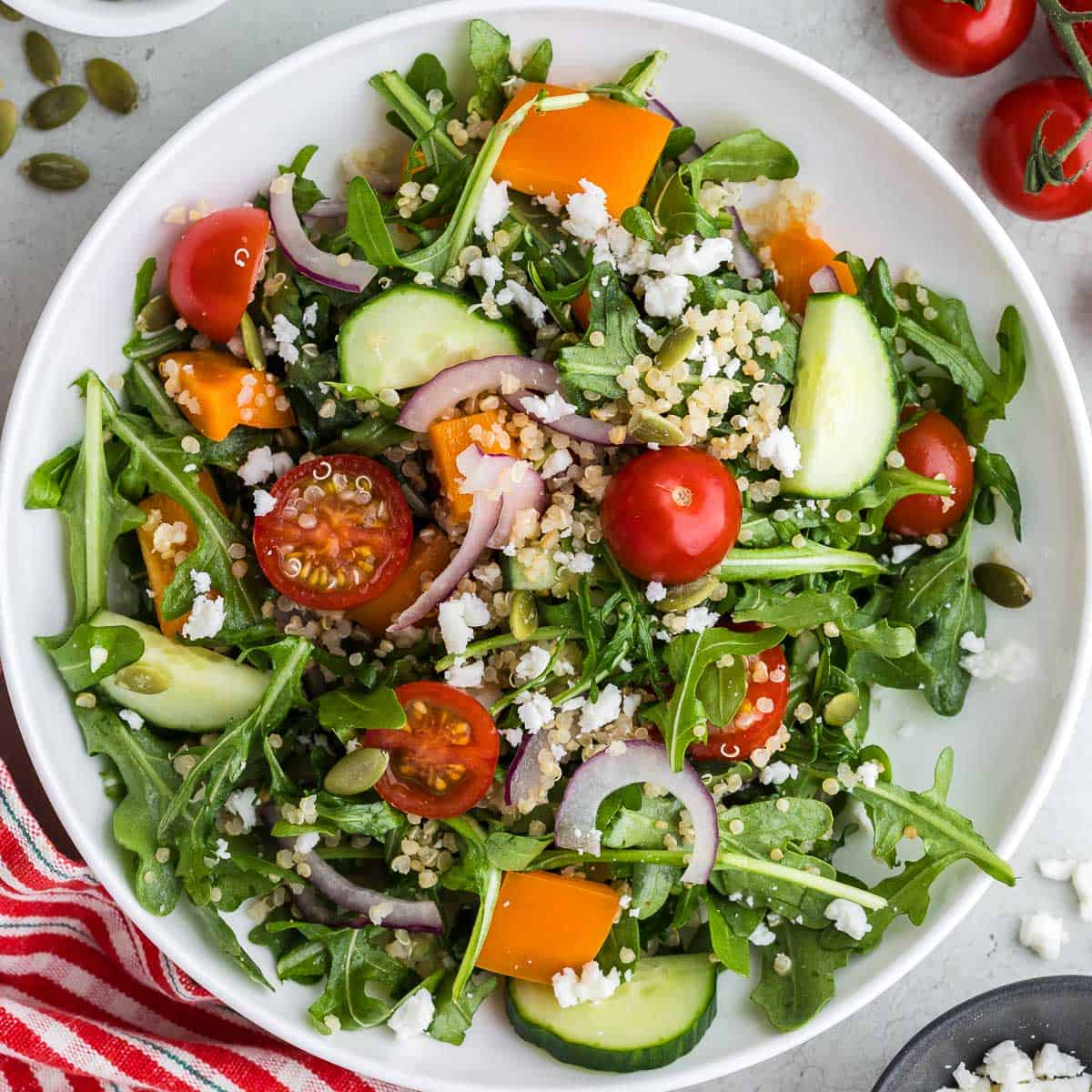
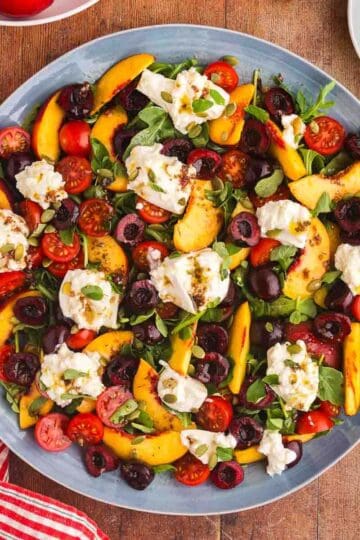
If you are looking for other great salads to compliment your meals, you can check out some of my favorites:

Pairing
What to serve with Greek salad? Well luckily it goes great with so many items, especially grilled meats:



Greek Salad

Equipment
- Mixing bowls
- Whisk
- Measuring Spoons
- Measuring Cups
- Serving Bowl
- Serving Spoons
Ingredients
Dressing
- ¼ cup extra virgin olive oil
- 2 tablespoon red wine vinegar
- 2 tablespoon fresh lemon juice
- 1 garlic clove minced
- 1 teaspoon dried oregano
- Salt and Pepper to taste
Salad
- 3 Roma tomatoes deseeded and chopped or cherry tomatoes
- 1 English cucumber deseeded and chopped
- 1 Bell pepper
- ¼ cup Diced red onion
- 5-7 oz Feta Cheese
- ½ cup Kalamata Olives pitted
Instructions
Dressing
- Into a small bowl add ¼ cup extra virgin olive oil, 2 tbsp red wine vinegar, 2 tbsp fresh lemon juice, 1 garlic clove minced, 1 tsp dried oregano.
- Whisk together until well combined. Season with salt and pepper to taste. Set the bowl aside.
Salad
- Deseed the Roma tomatoes. See post above for how to. (3 Roma tomatoes deseeded and chopped)
- Chop the tomatoes, cucumber and bell pepper into bite sized pieces and place in a large bowl.
- Slice the red onion into thin slices about 1-2" long. Add to the salad bowl. (¼ cup red onion)
- Add in the olives and crumbled or cubed feta. (½ cup Kalamata Olives, 5-7 oz Feta Cheese)
- Stir to combine. Pour Greek dressing over top and stir again to make sure everything is covered in the dressing. Serve and enjoy.
Notes
- Deseeding the tomatoes helps to keep the salad from getting soggy. If you are eating it all right away, you don't need to deseed, but if it will sit in the fridge for a bit, I recommend it.
- For presentation sometimes I add the feta cheese and kalamata olives after the dressing has been added to the rest of the ingredients. Gently stir them in. This just gives a cleaner presentation.
- Leftover salad can be stored in an airtight container for about 3 days in the fridge. The vegetables start to release moisture as it sits, but if you deseeded the tomatoes that will really help.


Comments
No Comments